I had been hanging on to a variety of computer gear for a while now (well, a few years actually) - an old PC with a defunct power supply, an unwanted surround-sound system, flatbed scanner that was not compatible with my current PC, and so on. I don't like to just throw-away things like that. It seems almost criminal to trash something that cost you £1,200 six years ago, and is still perfectly useable (with a bit of attention). And in any case, it is not that easy to get rid of bulky stuff when you live in a tower block - it just won't fit down the rubbish chute.
So, I had been hanging on to this stuff for quite a while, wondering what to do with it. I looked to see if there were any charity shops nearby that would come and collect. When I was a lad, people from voluntary organisations used to come around regularly collecting for "jumble sales". I myself used to do this for the cubs and scouts. But I have never encountered anything like that in the 23 years I have been living in London.
I assumed that there would be loads of local groups willing to take this stuff off my hands, but I could find nothing on the net. What I did find, however, was
Freecycle. This is, effectively, a non-profit network of people who offload their unwanted stuff on each other. They use the Yahoo! Groups system to allow people to advertise stuff they don't want to people that might want or make use of it. For free. Members can also ask for stuff they are looking for.
I have to say that I was a bit dubious at first. But then I saw how much traffic there was in our own local area - the Lewisham Freecycle group has 5,688 members, and averages around 1,700 posts per month in it's group. So I decided to give it a try.
I was convinced that my pathetic collection of ancient and clapped-out computer hardware and software would not interest anybody. I was wrong. Within a few hours of posting my "OFFERED" items I received over 20 expressions of interest. I have to admit that I was a bit slow in following these up - partly because it was difficult to know where (or with whom) to start, and then I hadn't counted on the first few people I responded to ignoring my e-mails. But a week or so later my old PC and sound system have found a new home, the scanner is nearly gone, and there is actually someone who is interested in my carrier bag of old games CD-ROMs.
I am quite pleased with the outcome. Although it was slightly more of an effort to make the final arrangements than I had expected, it actually all worked well. I really don't like just throwing away perfectly good stuff just because I don't want or need it anymore, and Freecycle seems to be the answer. I'll certainly use it again.
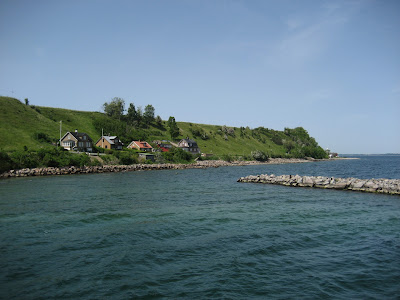 Ven (or Hven in Danish and old Swedish) is a small island in the middle of the Öresund strait between Sweden and Denmark. We decided to go there for a day trip on our visit to Copenhagen, and had a lovely time.